
Key facts
- Seasonal affective disorder (SAD) is a type of depression with a seasonal pattern, most commonly beginning in fall or winter.
- It is more than the "winter blues," and symptoms can interfere with daily life.
- Reduced sunlight is thought to play a central role in the condition.
- Effective treatments include light therapy, psychotherapy, and medication.
What is seasonal affective disorder?
Seasonal affective disorder is a form of depression that recurs at the same time each year, typically starting in the late fall or early winter and easing in spring and summer. Because the symptoms come and go with the seasons, clinicians describe it as major depression with a seasonal pattern. To meet that definition, the depressive episodes follow the seasons for at least two years in a row and make up most of the person's depressive episodes over their lifetime.
SAD is a real medical condition, not just feeling a little down when the days get shorter. The mood changes are significant enough to affect work, relationships, and daily functioning. According to the National Institute of Mental Health, millions of Americans experience SAD, although many do not realize they have this common, treatable condition. The encouraging part is that symptoms often improve a great deal with the right approach, and many people learn to plan ahead for the months that affect them most.
It helps to separate SAD from the milder "winter blues." Plenty of people feel a little slower or flatter when daylight fades, and that is normal. SAD is different in degree and impact: the symptoms last most of the day, nearly every day, for weeks at a time, and they interfere with the things you need and want to do. If your low mood shows up like clockwork each year and disrupts your life, that is worth taking seriously.
Symptoms
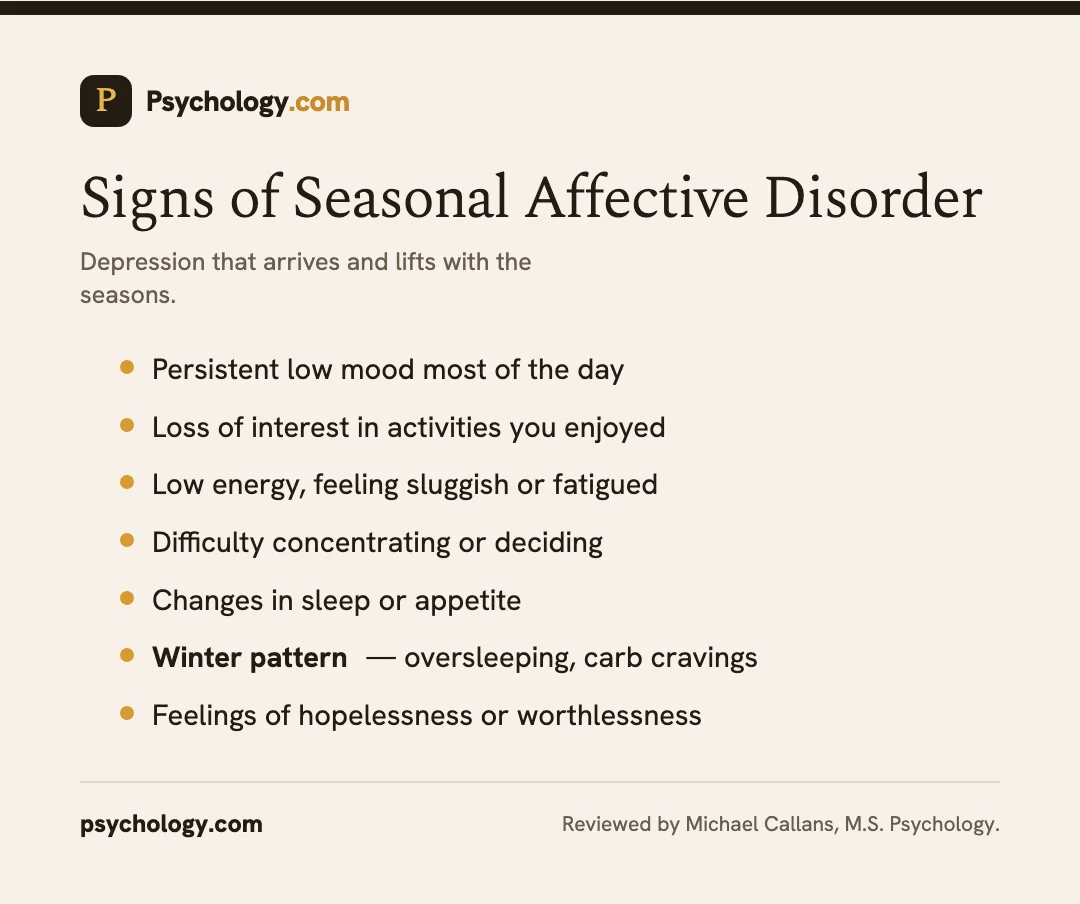
SAD shares many features with other forms of depression. The difference is the timing: symptoms arrive and lift with the seasons, year after year. Common signs include:
- Persistent low mood for most of the day, nearly every day
- Loss of interest or pleasure in activities you used to enjoy
- Low energy and feeling sluggish or fatigued
- Difficulty concentrating or making decisions
- Changes in sleep or appetite
- Feelings of hopelessness, worthlessness, or guilt
- Thoughts of death or suicide
The pattern of symptoms tends to differ by season. In the common winter pattern, the National Institute of Mental Health notes that people often oversleep, overeat (especially craving carbohydrates), gain weight, and withdraw socially, almost like a kind of hibernation. The less common summer pattern can involve trouble sleeping, poor appetite, weight loss, restlessness, and agitation. If symptoms become severe, or if thoughts of self-harm appear, treat that as a reason to seek help right away rather than waiting for the season to change.
Types
- Winter-pattern SAD: the most common form, with symptoms that begin in fall or winter and improve in spring and summer.
- Summer-pattern SAD: a less common form, with symptoms that appear in late spring or summer and ease in the colder months.
SAD can also be thought of as a recurring version of major depression, and some people with bipolar disorder notice a seasonal pattern to their mood episodes. A clinician can help sort out which pattern fits and tailor treatment accordingly.
Causes and risk factors
The exact cause is not fully understood, but research points to the way reduced winter daylight affects the brain and body. Several factors appear to contribute:
- Reduced sunlight: shorter days can disrupt the body's internal clock (circadian rhythm), which helps regulate mood, sleep, and energy.
- Brain chemistry: changes in serotonin and melatonin levels can affect mood and the sleep-wake cycle. Some research also links winter-pattern SAD to lower vitamin D, which the body makes from sunlight.
- Geography: SAD is more common in people living farther north, where winter days are shorter. The National Institute of Mental Health notes that people in Alaska or New England are more likely to develop SAD than people in Texas or Florida.
- Sex and age: SAD occurs much more often in women than in men, and in most cases it begins in young adulthood.
- Personal and family history: a history of depression or bipolar disorder, or a family history of these conditions or of SAD, raises risk.
How seasonal affective disorder is treated
SAD responds well to treatment. There are four main approaches, used alone or in combination: light therapy, psychotherapy, antidepressant medication, and vitamin D. Your provider can tailor a plan to your pattern, severity, and any other conditions you have.
Light therapy
For winter-pattern SAD, daily exposure to a bright light box has been a mainstay of treatment since the 1980s. People typically sit in front of a box that gives off very bright light (often around 10,000 lux) for about 30 to 45 minutes each morning, from early fall until spring. The light is filtered to remove harmful UV rays. Because light boxes vary and are not all safe for the eyes, and because bright light is not right for everyone (including some people with bipolar disorder or eye conditions), it is best to start light therapy with guidance from a clinician.
Psychotherapy
Cognitive behavioral therapy (CBT), including a version adapted specifically for SAD (CBT-SAD), helps you identify and change the negative thoughts and behaviors that deepen low mood, and build habits and routines that carry you through the difficult months. Some research suggests its benefits may last longer than light therapy alone in preventing future episodes.
Medication and self-care
Because SAD is a form of depression involving serotonin, antidepressants (typically SSRIs) can help, and a prescriber may suggest starting them before symptoms usually begin and continuing through the season. An extended-release form of bupropion is also approved to prevent winter depressive episodes. Learn more about antidepressants. Spending time outdoors, opening blinds and sitting near windows, exercising regularly, keeping a consistent sleep schedule, and staying socially connected can all support recovery alongside professional treatment.
When to seek help
It is normal to have some off days, but reach out to a doctor or mental health professional if low mood, loss of interest, or other symptoms return each season and get in the way of daily life, or if you notice changes in sleep, appetite, or energy that concern you. A clinician can confirm whether what you are experiencing is SAD, rule out other causes, and help you build a plan. Because SAD is predictable, recognizing the pattern early lets you start treatment before symptoms peak, which often makes the season easier to get through.
Get help immediately if you have thoughts of harming yourself. In the US, you can call or text the 988 Suicide & Crisis Lifeline any time for free, confidential support. If you are in immediate danger, call 911 or go to the nearest emergency room. Reaching out is a sign of strength, and effective help is available.
Frequently asked questions
Is seasonal affective disorder the same as the winter blues?
No. Many people feel a little flat in winter, but SAD is a form of depression with symptoms serious enough to interfere with daily life. If your low mood returns each year and disrupts functioning, it is worth talking to a professional.
Does light therapy really work?
For many people with winter-pattern SAD, light therapy is an effective treatment. It works best when used consistently and as directed, ideally with guidance from a clinician.
Can SAD happen in the summer?
Yes, though it is less common. Some people experience a summer pattern with symptoms such as trouble sleeping, reduced appetite, and restlessness.
Related conditions
Therapists who specialize in seasonal affective disorder
Connect with a licensed therapist on Psychology.com who works with seasonal affective disorder.
- A FAMILY MATTER
- Advance Thru Psychotherapy and Family Development
- Barbara L Edwards
- Beth Wilson
- Candice Edelbaum
- Caren Nowak
Finding the right help
When you are ready to take the next step, these guides walk you through finding and starting with the right therapist.
- Depressed or just sad?
- Getting started with therapy
- How to find the right therapist
- Find a therapist who takes insurance
- Free & low-cost therapy
References
- National Institute of Mental Health (NIMH). Seasonal Affective Disorder.
- National Institute of Mental Health (NIMH). Depression.
- National Health Service (NHS). Overview: Seasonal affective disorder (SAD).
- 988 Suicide & Crisis Lifeline. Free, confidential 24/7 support.