
Key facts
- Panic disorder is a type of anxiety disorder marked by repeated, unexpected panic attacks.
- Panic attacks peak within minutes and, while frightening, are not physically dangerous.
- The core treatments are psychotherapy, medication, or both, and they work for most people.
- Many people fear losing control or having a heart attack during an episode, but the symptoms come from the body's alarm response.
What is panic disorder?
Panic disorder is an anxiety disorder defined by recurrent, unexpected panic attacks: sudden surges of intense fear or discomfort that reach a peak within minutes. A single panic attack is common and not a disorder on its own. Panic disorder is diagnosed when attacks happen repeatedly and a person spends a lot of time worrying about having more or changes their behavior to avoid them.
The physical symptoms can be so strong that people often believe they are having a heart attack or a medical emergency. In reality, a panic attack is the body's fight-or-flight alarm firing when there is no real danger. It is distressing but not harmful, and panic disorder responds very well to treatment. It is also fairly common. The National Institute of Mental Health estimates that 2.7% of U.S. adults had panic disorder in the past year and about 4.7% experience it at some point in their lives, with rates more than twice as high in women as in men.
The diagnostic framework most clinicians use comes from the American Psychiatric Association's DSM-5. In plain terms, it describes a panic attack as an abrupt surge of intense fear that peaks within minutes and includes a defined set of physical and mental symptoms. Panic disorder is the diagnosis when those attacks are recurrent and unexpected and are followed by at least a month of persistent worry about more attacks or by changes in behavior meant to avoid them. Because a first attack can mimic a heart problem, an evaluation also rules out medical causes. A clinician makes the diagnosis, so this is for understanding rather than self-labeling.
Symptoms
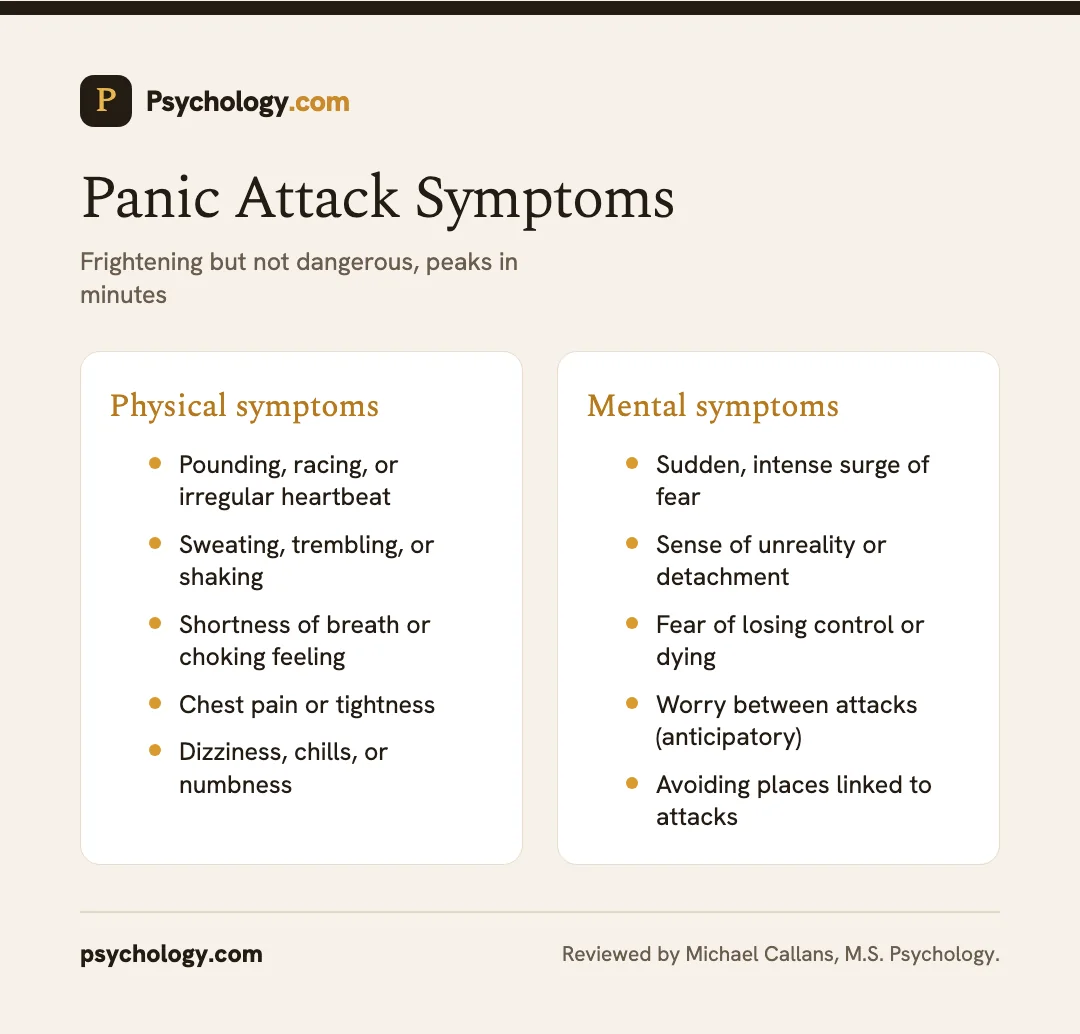
A panic attack involves a sudden rush of fear along with several physical and mental symptoms, including:
- Pounding, racing, or irregular heartbeat
- Sweating, trembling, or shaking
- Shortness of breath or a feeling of choking
- Chest pain or tightness
- Nausea or stomach distress
- Dizziness, lightheadedness, or feeling faint
- Chills or hot flashes
- Numbness or tingling
- A sense of unreality or feeling detached from yourself
- Fear of losing control, "going crazy," or dying
Most attacks peak within about ten minutes and ease within twenty to thirty minutes, though you may feel drained afterward. In panic disorder, the attacks are followed by at least a month of persistent worry about more attacks or by avoiding situations linked to them. This worry between episodes, sometimes called anticipatory anxiety, is a defining feature and can be as disruptive as the attacks themselves. Over time some people develop agoraphobia, a fear of places or situations where escape might be difficult or help unavailable, such as crowds, public transport, or being far from home.
Causes and risk factors
There is no single cause. Panic disorder usually develops from a combination of factors:
- Biology: brain chemistry and genetics. It can run in families, and panic disorder often begins in late adolescence or early adulthood.
- Temperament: sensitivity to stress or a tendency toward negative emotions, including a heightened awareness of normal bodily sensations.
- Life events: major stress, trauma, or significant loss or change can precede the first attacks.
- Health and substances: caffeine, nicotine, stimulants, and some medical conditions can trigger or worsen attacks.
A common cycle keeps panic disorder going. A frightening attack leads to fear of the next one, which raises baseline anxiety and makes the body's alarm more likely to fire again. People often start scanning their bodies for early warning signs, and that hypervigilance can turn a normal flutter of the heart or a moment of dizziness into the spark for a full attack. Avoidance then narrows life further: skipping the gym because exercise raises the heart rate, avoiding coffee, or staying close to home. Treatment works in part by interrupting this loop, helping the body relearn that these sensations are safe.
How panic disorder is treated
Panic disorder is one of the most treatable anxiety disorders. Most people improve significantly, and a combination of approaches often works best.
Psychotherapy
Cognitive behavioral therapy (CBT) is a first-line treatment recommended by the NHS and others. It helps you understand what happens during a panic attack, reframe catastrophic thoughts, and gradually face feared sensations and situations. A specific technique called interoceptive exposure deliberately and safely brings on harmless body sensations, such as a racing heart from light exercise, so they stop triggering panic. The American Psychological Association notes that exposure-based work is well established for panic. Learning that the symptoms are uncomfortable but not dangerous is a turning point for many people.
Medication
Antidepressants are commonly used and can reduce both the frequency and intensity of attacks. Selective serotonin reuptake inhibitors (SSRIs) such as sertraline and escitalopram, and serotonin-norepinephrine reuptake inhibitors (SNRIs) such as venlafaxine, are typical first choices. Benzodiazepines may occasionally be used for short-term relief but carry a risk of dependence, so they are not a long-term solution. All medication should be started and adjusted by a prescriber. Learn more about antidepressants.
Lifestyle and self-care
Slow breathing and grounding techniques, regular physical activity, good sleep, and limiting caffeine and alcohol all help reduce panic. These complement, but do not replace, professional treatment.
Which professional to see
Because a first severe attack can resemble a heart problem, it is reasonable to start with your primary care doctor or urgent care to rule out a medical cause. For ongoing treatment, a psychologist or licensed therapist trained in CBT can deliver the talk-therapy side, while a psychiatrist or primary care doctor can prescribe and monitor medication if it is needed. Many people use both at the same time.
When to seek help
Reach out to a doctor or mental health professional if you have recurring panic attacks, spend a lot of time worrying about them, or start avoiding places and activities because of them. Because some panic symptoms overlap with heart and other medical problems, a first severe episode should be checked by a doctor to rule out a physical cause. Treatment is effective, and getting help early prevents avoidance from taking hold.
Frequently asked questions
Are panic attacks dangerous?
Panic attacks feel alarming but are not physically dangerous. The symptoms come from the body's fight-or-flight response. Because some symptoms resemble other conditions, it is wise to have a doctor rule out medical causes the first time.
How long does a panic attack last?
Most panic attacks peak within about ten minutes and ease within twenty to thirty minutes, though you may feel drained afterward. Slow breathing and grounding can help you ride one out.
Is panic disorder the same as anxiety?
Panic disorder is a specific type of anxiety disorder. It centers on sudden, intense panic attacks and the fear of more, rather than the broader, ongoing worry seen in generalized anxiety.
Related conditions
Therapists who specialize in panic disorder
Connect with a licensed therapist on Psychology.com who works with panic disorder.
- A FAMILY MATTER
- Advance Thru Psychotherapy and Family Development
- Anne Ciota
- Arlyn P. Stern LCSW
- Asktheinternettherapist.com
- Barbara Ann Elbl
Finding the right help
When you are ready to take the next step, these guides walk you through finding and starting with the right therapist.
- Normal anxiety or an anxiety disorder?
- Getting started with therapy
- How to find the right therapist
- Find a therapist who takes insurance
- Free & low-cost therapy
References
- National Institute of Mental Health (NIMH): Panic Disorder Statistics (past-year and lifetime prevalence)
- NHS: Panic Disorder, Symptoms and Treatment (CBT and medication)
- American Psychological Association: Exposure Therapy
- Mayo Clinic: Panic Attacks and Panic Disorder, Symptoms and Causes